

Revising vs Editing: What's the Difference and Why Does It Matter?
Revising vs Editing: What's the Difference and Why Does It Matter?
Most writers use 'revising' and 'editing' as though they mean the same job. That small muddle costs real time: an afternoon spent polishing commas in a scene you later cut, or a fortnight tidying a chapter that needed reordering from scratch. The two stages ask different questions and demand different kinds of attention. Keep them apart and both get faster — and the draft gets better.
Two jobs, two different questions
Revision asks whether the thing works. Editing asks whether each sentence is doing its job well.
Revision deals with structure, pace, character, argument and order — the architecture of a piece. Editing deals with the surface: word choice, sentence rhythm, grammar, punctuation, consistency, typos. Revision is a question of whether. Editing is a question of how.
The word itself is a clue. Revision comes from re-vision: seeing again. It's a fresh look at the whole, the kind of look that lets you notice the subplot that goes nowhere or the argument that peaks in the middle and then coasts. Editing is closer to caretaking: you've decided the thing works, and now you're making every line carry its weight.
Here's a practical test. If you cut a paragraph entirely, you were revising. If you cut three words from it, you were editing.
An example of each
Imagine a chapter that opens with a gorgeous description of a coastal town in winter. The prose is immaculate. Then, two hundred words later, the reader remembers there was supposed to be a plot. That's a revision problem: the description is fine, it's just in the wrong place, doing the wrong job. A comma-by-comma edit will make that passage even more beautiful and even more damaging.
Now imagine a line of dialogue: "I don't think that's a very good idea, honestly," she said, somewhat hesitantly. The scene is right, the beat is right, the character is right. The problem is that several words are doing the work of one, and the adverb is apologising for the line before it. That's an editing problem, and it lives inside the sentence.
Revise the story. Edit the sentences. Never spend an hour editing a paragraph you might not keep.
Why the order matters
Editing before revising is the most common way to waste an afternoon. It feels productive because it produces visible results — cleaner sentences, fewer typos, a quiet sense that the draft is improving. But you are decorating a room you may knock down next week.
Worse, it actively works against you. Polished prose is harder to cut. Once you've spent twenty minutes tuning a paragraph, you have a stake in it. You start explaining why it should stay rather than asking whether it earns its place. The shine creates an attachment that structure can't afford.
There's also a mental cost to switching. Revision needs you to hold the whole piece in your head: the arc, the pacing, the promises you made in chapter two and the payoff due in chapter eleven. Editing needs the opposite — a narrow, local focus on one sentence at a time. Trying to do both at once means flipping between zoom levels every few seconds, and you'll do neither well.
What revision actually looks like
When you revise, you should be willing to do almost anything to the draft. Revision questions tend to be big and uncomfortable:
- Structure: Does the piece start in the right place? Would it be stronger beginning later, or ending earlier?
- Order: Are the sections in the best sequence, or merely in the sequence you happened to write them?
- Argument or plot: Does every part build toward something, or does the middle plateau?
- Character or perspective: Whose story is this, and whose eyes should the reader be looking through?
- Pace: Where does attention sag? What can be removed whole without loss?
- Promise and payoff: For every question you raise, do you answer it — and for every answer, did you set it up?
Revising often means rewriting from an outline, moving whole scenes, merging two characters into one, or deleting a favourite passage because it belongs to a different piece. It's the stage where you're allowed to be ruthless, because nothing is settled yet.
What editing actually looks like
Editing assumes the structure is sound. It works at the level of the sentence and the paragraph:
- Word choice: Is this the precise word, or the first one that came to mind?
- Sentence rhythm: Do the sentences vary in length, or march along at the same tempo?
- Clarity: Can any sentence be misread? Is the subject doing the action?
- Repetition: Have you used "suddenly" eleven times?
- Consistency: Names, dates, spelling conventions, tense, point of view.
- Mechanics: Commas, agreement, dangling modifiers, the small machinery underneath.
Editing is where you tighten: "in order to" becomes "to", "he was aware of the fact that" becomes "he knew". It's quieter work, but it's the difference between a piece that is merely correct and one that reads effortlessly.
Three editing passes worth separating
- Line edit: sentence-level work — rhythm, clarity, word choice, cutting flab. Still creative.
- Copy edit: consistency, house style, factual slips, grammar, punctuation. More mechanical.
- Proofread: typos, stray marks, formatting, missing words. Best done from a printout or on a different screen, ideally a day later.
Running these as separate passes is faster than trying to catch everything at once, because your brain only hunts for one kind of problem at a time.
A workable sequence
- Rest. Put the draft aside long enough to forget it. A day minimum; a week is better.
- Read it through without a pen, to see what you actually wrote rather than what you meant.
- Revise the structure. Outline what exists, then reorder, cut and rewrite.
- Rest again. The new shape needs to stop feeling new.
- Revise once more for pace and detail, now that the bones are right.
- Line edit sentence by sentence.
- Copy edit for consistency and mechanics.
- Proofread last, and read aloud if you can — the ear catches what the eye forgives.
When the line blurs
Short pieces often collapse the stages. A 400-word news item or a work email may need one pass, and switching hats mid-paragraph is fine when there's no architecture to speak of.
Even in a long draft, the boundary leaks. You'll be editing a sentence and realise the scene doesn't belong — that's revision interrupting, and you should let it. The rule isn't "never edit while revising"; it's "don't only edit while revising".
The one hard rule is direction. Fixing a small problem can reveal a big one; patching a big problem by tinkering with small ones almost never works. If you find yourself rewriting the same paragraph for the fourth time, the paragraph isn't the problem. Go up a level.
Why it matters
Keeping the two stages apart isn't fussiness. It's the difference between finishing a draft and endlessly improving one. Revision decides what the piece is. Editing decides how well it speaks. Do them in that order, and you spend your time on the decisions that actually change the reader's experience — instead of perfecting sentences you were going to delete.
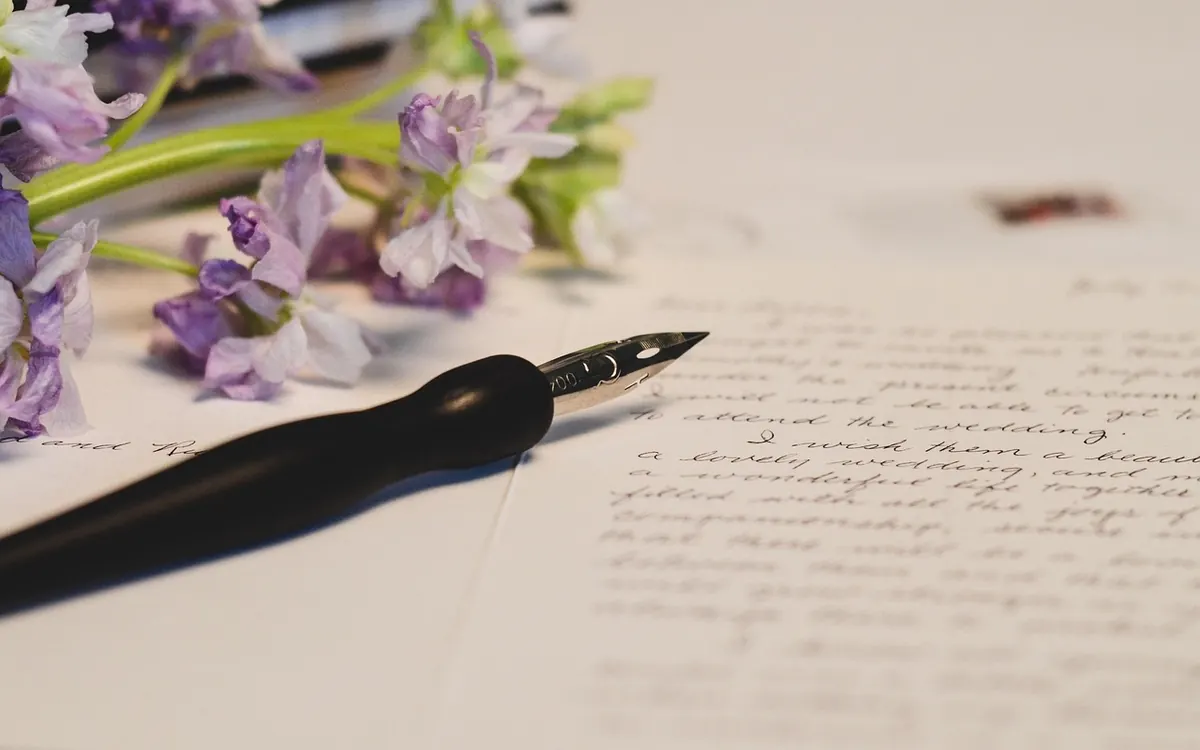
Photo: hudsoncrafted / Pixabay